Anti Rust Spray That Goes Where a Brush Never Reaches
A gun atomizes coating into a cone that wraps weld beads, fastener heads, lap seams, and the inside of box sections — geometry a roller physically cannot follow. OR93BL and Flak Jacket polyurea are sprayed hot through a plural-component gun and build a seamless 20–120 mil membrane in one pass. Not a rattle can. A system.
Get Spray Specs & PricingWhy the Spray Gun Is the Whole Argument
Atomization Follows Geometry
A brush bristle and a roller nap can only touch what is flat and facing them. Atomized material arrives as a cloud of droplets that land on the underside of a flange, the back radius of a weld bead, and the shadowed face of a fastener head. Coverage stops being a function of what you can reach and starts being a function of where you can aim.
Edges Stay Thick Instead of Thinning Out
Surface tension pulls a wet brushed film away from every sharp edge as it levels — that is why corrosion nearly always starts on a cut edge, a corner, or a weld crown. Sprayed polyurea gels in 3–6 seconds, long before the film has time to run off the edge. The mil reading on the corner matches the mil reading on the panel.
Vertical and Overhead Without Sag
You can lay 80 mil on the underside of a deck plate or the inside wall of a hopper and none of it runs. Fast-set chemistry means the material is no longer liquid by the time gravity has anything to say about it — so one heavy pass replaces four thin ones with dry time between each.
One Pass, No Lap Lines
Every brushed or rolled coat leaves a lap boundary and an inter-coat bond that can fail. Spraying wet-on-wet inside the gel window produces a single continuous membrane with no internal interfaces — nothing for water to travel along and no layer to delaminate from the one beneath it.
Where Spray Reach Actually Matters
These are the parts that rust first because they are the parts a brush cannot properly coat. Every one of them is routine work for a spray rig.
- Wheel wells & rocker panels
- Frame rails & box sections
- Weld seams & lap joints
- Fastener heads & bolt patterns
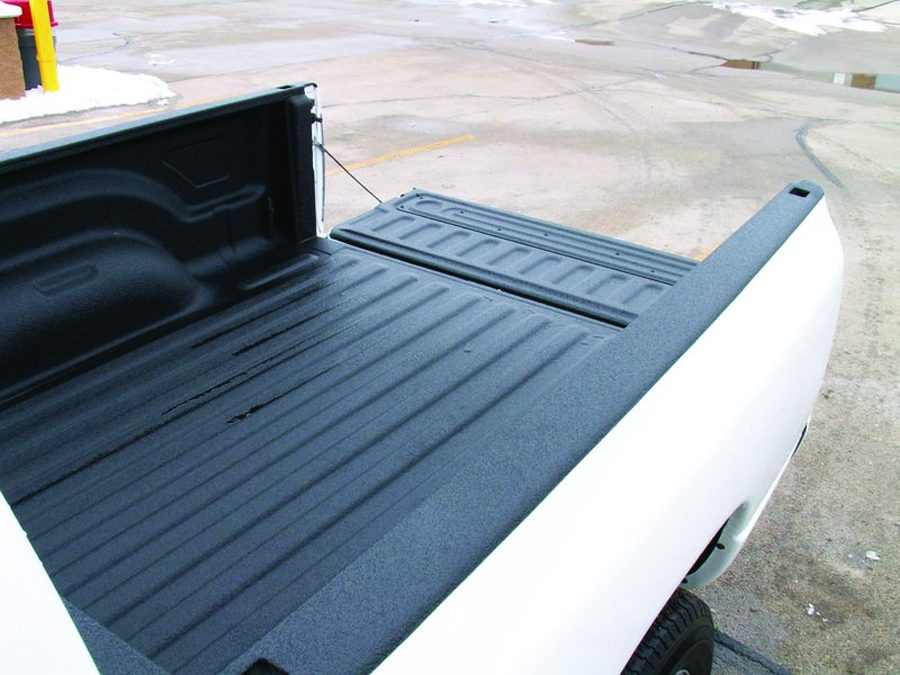
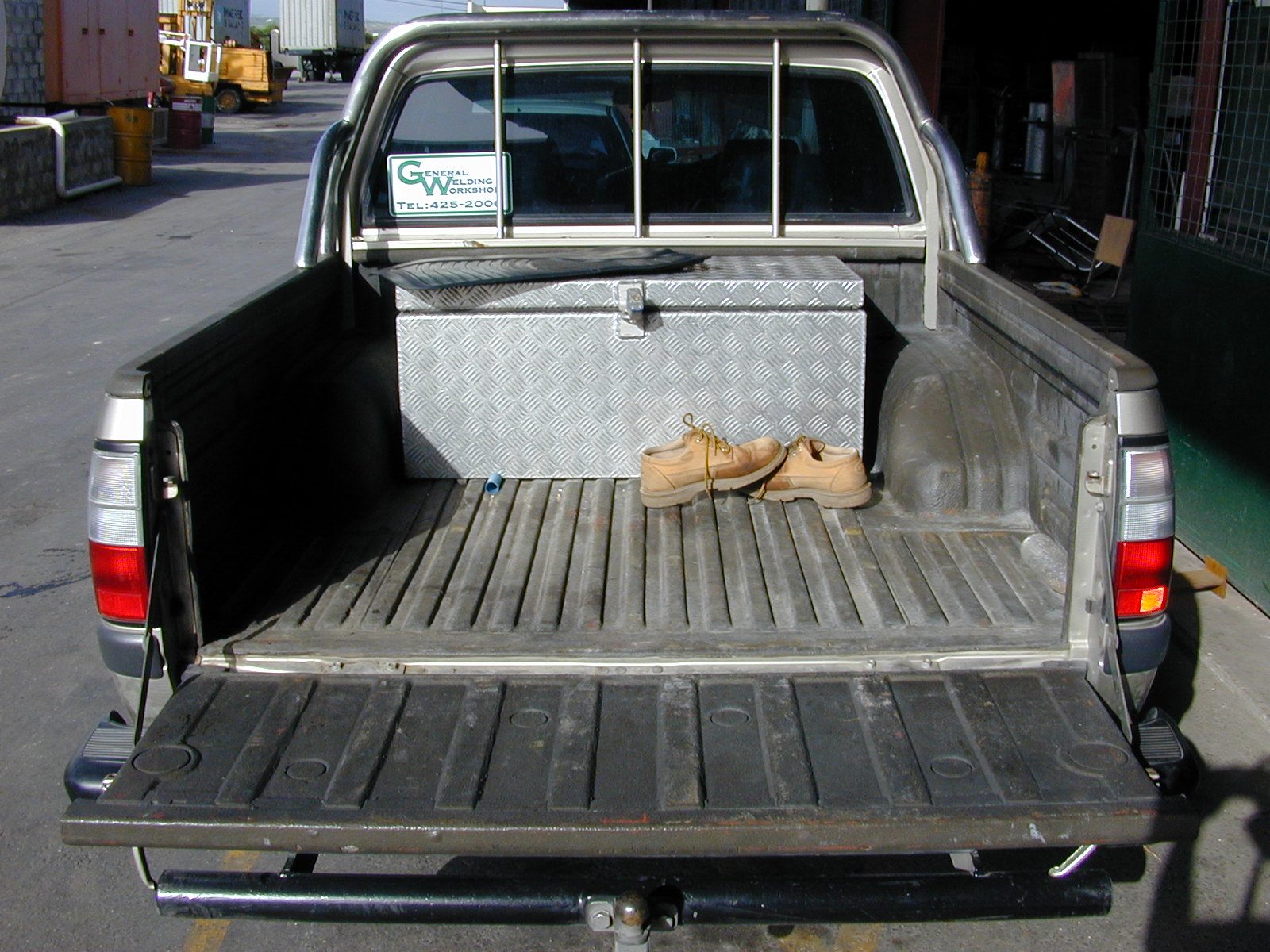
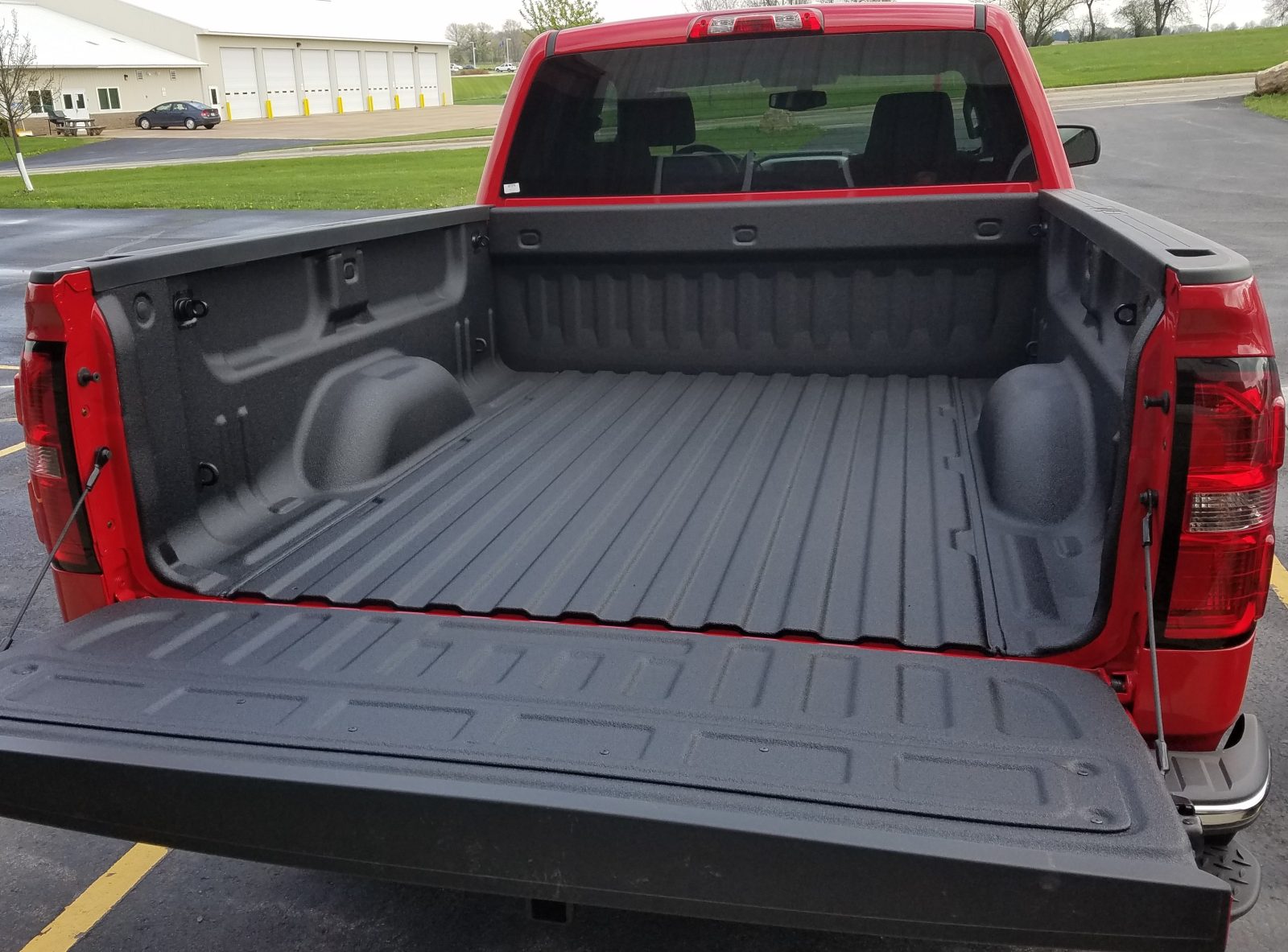
- Truck beds & tailgates
- Trailer frames & crossmembers
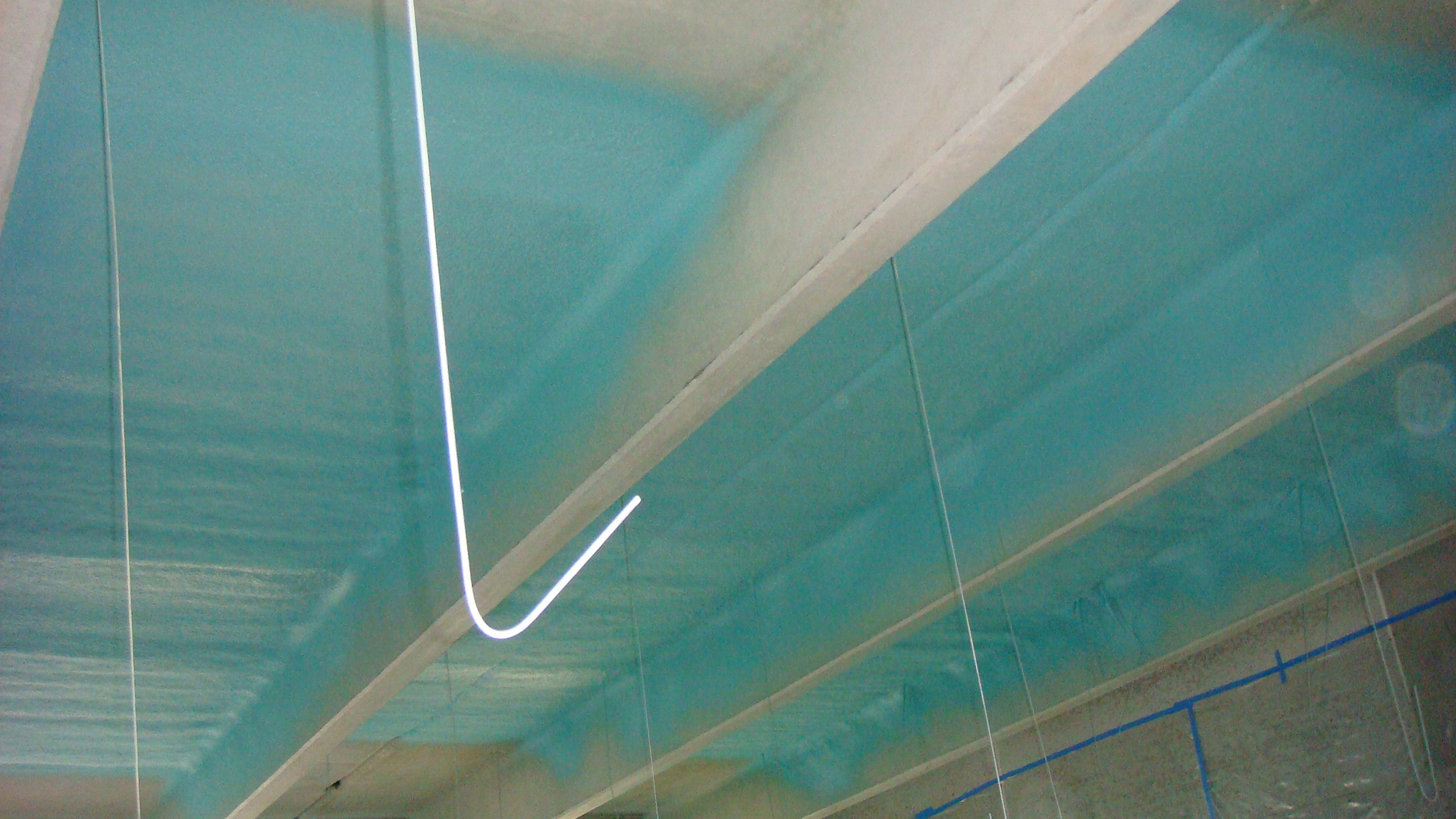
- Bar joists & roof purlins
- Hopper & chute interiors
- Fabricated steel corners & gussets
- Equipment underbodies
What Gets Sprayed
Four real products. Which one goes in the gun depends on what the surface takes after you leave.
Aerosol Can vs. Plural-Component: An Honest Comparison
Search "anti rust spray" and most of what comes back is a can you shake. Those products have a legitimate place — they are convenient, cheap, and fine for a chipped bracket or a hinge in the shed. What they are not is a corrosion system, and the numbers explain why.
A typical aerosol lays down roughly 1 to 3 mils of solvent-borne film per coat. Half or more of what leaves the nozzle is carrier that evaporates, so the film shrinks as it dries and pulls thinner still at every edge. It is a touch-up. Treat it as one.
A plural-component gun delivers 20 to 120 mils of 100% solids polyurea in a single pass, with no evaporation and therefore no shrink. That is not the same product ten times over — it is a different category of protection. One is cosmetic maintenance; the other is a bonded elastomeric membrane with 2,500–3,000 PSI tensile strength that flexes with the steel for the life of the asset.
We sell the second thing. If the first thing solves your problem, buy the can — we would rather tell you that than sell you a rig you do not need.
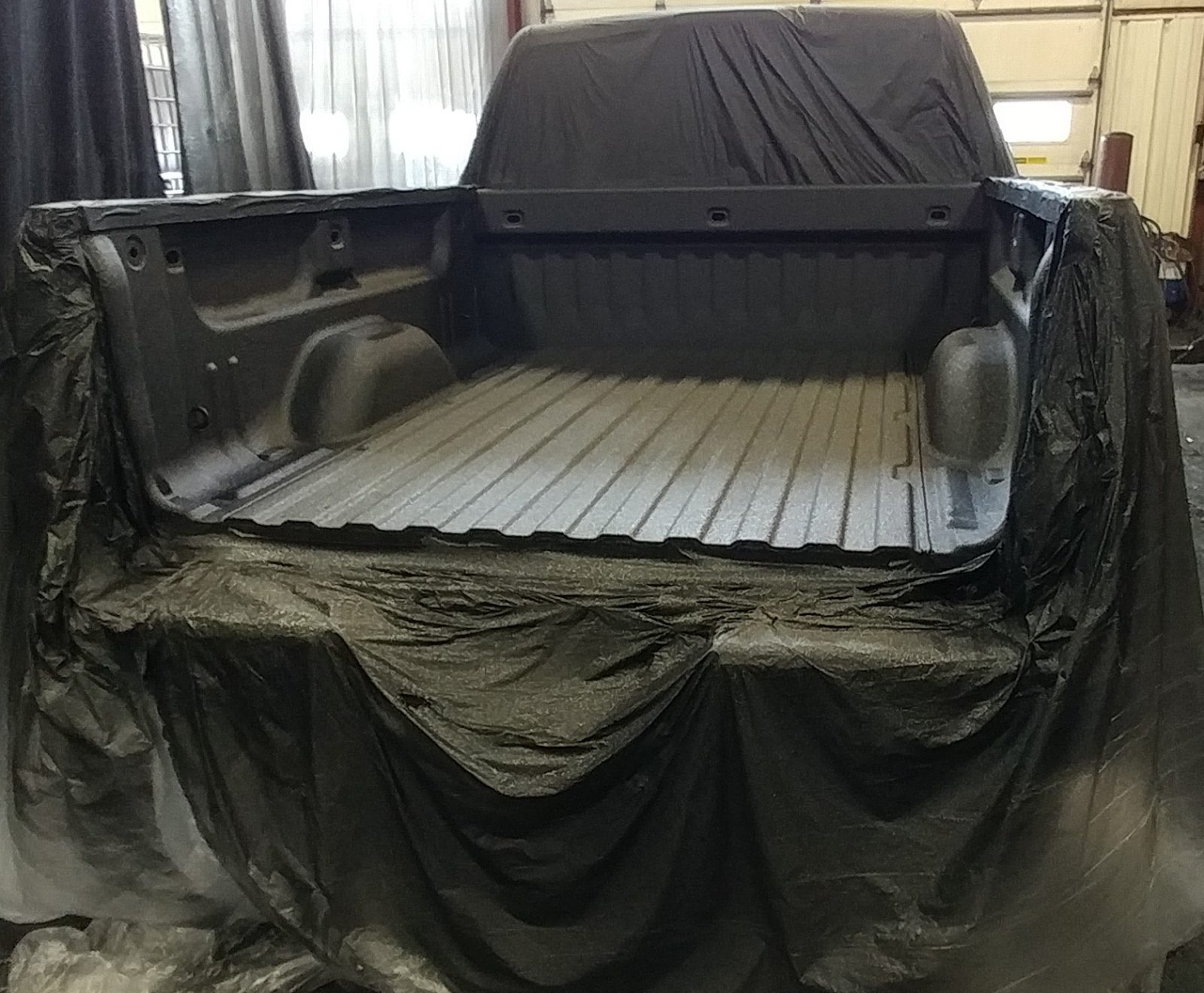
What Happens Between the Gun and the Steel
The interesting physics happens in about four feet of air and about four seconds of time.
Two heated components leave the mix chamber as a fan of fine droplets. Atomization is what lets the material behave like a gas on the way in and a solid on the way out: droplets carry into recesses, wrap around the shadow side of a bolt head, and coat the far radius of a weld toe that no bristle can bend into.
On contact they coalesce into a continuous wet edge. Then the reaction takes over — gel at 3 to 6 seconds, tack-free at 10 to 30. That short window is the reason a sprayed film can be built heavy on a vertical wall without sagging, and the reason the applicator has to keep the gun moving and overlap correctly. Technique matters. That is also why we back the material with training rather than just shipping drums.
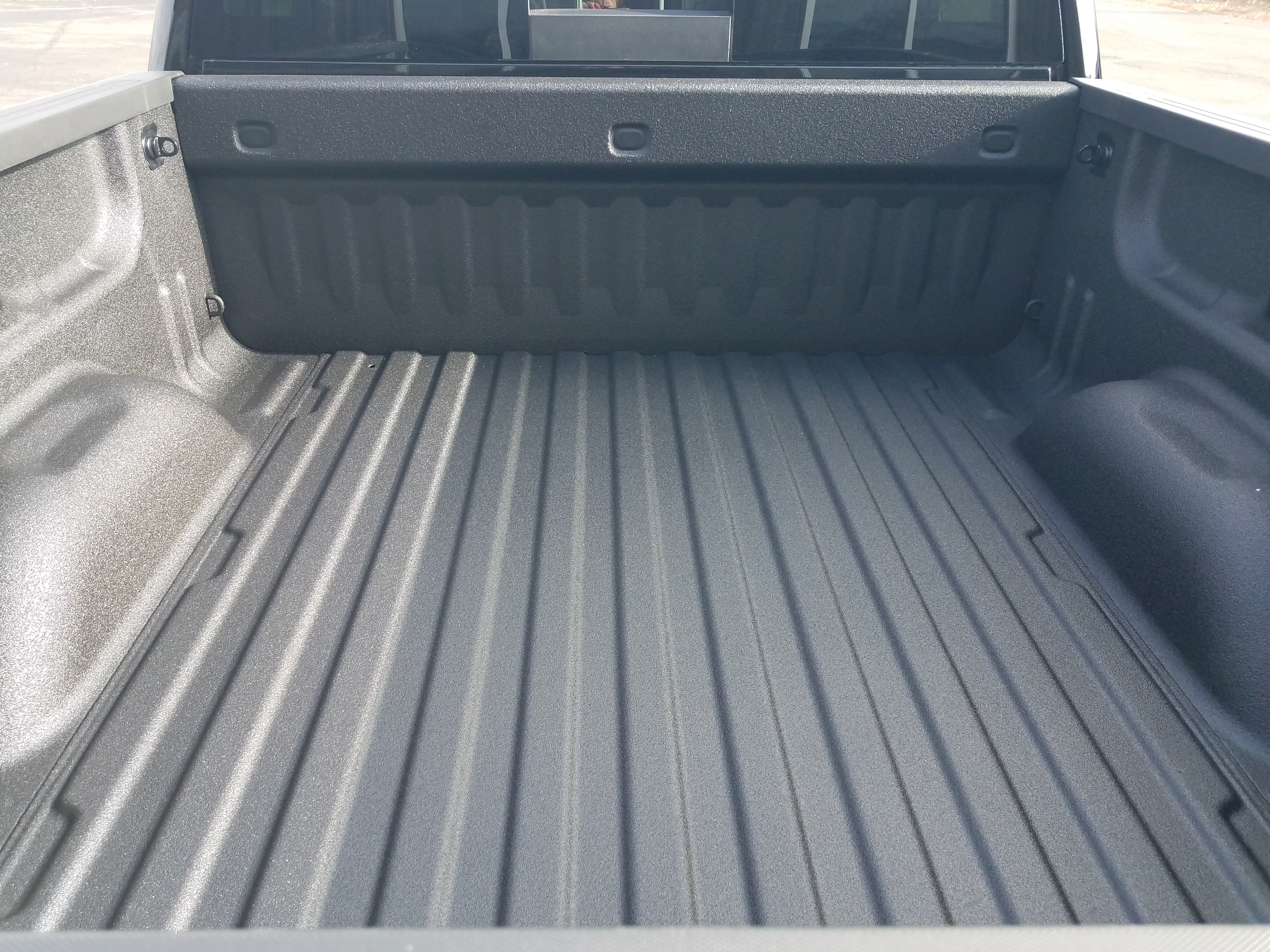
Spray vs. Can, Side by Side
Spray Work
Describe the Shape, Not Just the Metal
Tell us what the part looks like — how many seams, how many fasteners, whether there are cavities or blind faces — along with the exposure and square footage. We will tell you what to spray, at what thickness, and roughly what it costs. If a brush would genuinely do the job, we will say so.
Get Spray Specs & PricingGet Spray Specs & Pricing
Tell us about your project and we will follow up with product details, technical data sheets, and pricing.
Frequently Asked Questions
Frequently Asked Questions
Mostly about the spraying — what it reaches, what it cannot, and where the can fits in.
Spray vs. Aerosol vs. Brush
Is this the same as the anti rust spray sold in a can?
No, and it is worth being blunt about it. An aerosol lays down roughly 1 to 3 mils of solvent-borne film that shrinks as the carrier flashes off. It is a touch-up product for a chipped bracket or a hinge. What we supply is 100% solids polyurea sprayed through a plural-component gun at 20 to 120 mils per pass with zero shrinkage. Both are called anti rust spray. Only one is a membrane.
Could I just brush or roll the same material instead?
No. The components react in 3 to 6 seconds after they meet, so there is no working time to spread anything — the mixing has to happen at the gun and the material has to leave it immediately. That constraint is also the benefit: it is why the film does not sag overhead and does not thin at edges.
Why does a sprayed film hold thickness on edges when a brushed one does not?
Surface tension. Any wet film that stays liquid will level, and levelling pulls material away from sharp geometry toward flat areas — that is why corrosion so often starts on a cut edge or a weld crown. Fast-set polyurea gels before it can level, so the mil reading on a corner matches the mil reading on the panel beside it.
Is there anything a spray genuinely cannot reach?
Yes. Fully enclosed cavities with no access opening, threads that have to stay functional, and the mating faces of parts that are already bolted together. If a part needs to come apart for proper coverage, we will tell you rather than pretend the gun solved it.
Spraying It Well
How much overspray should I expect, and how is it controlled?
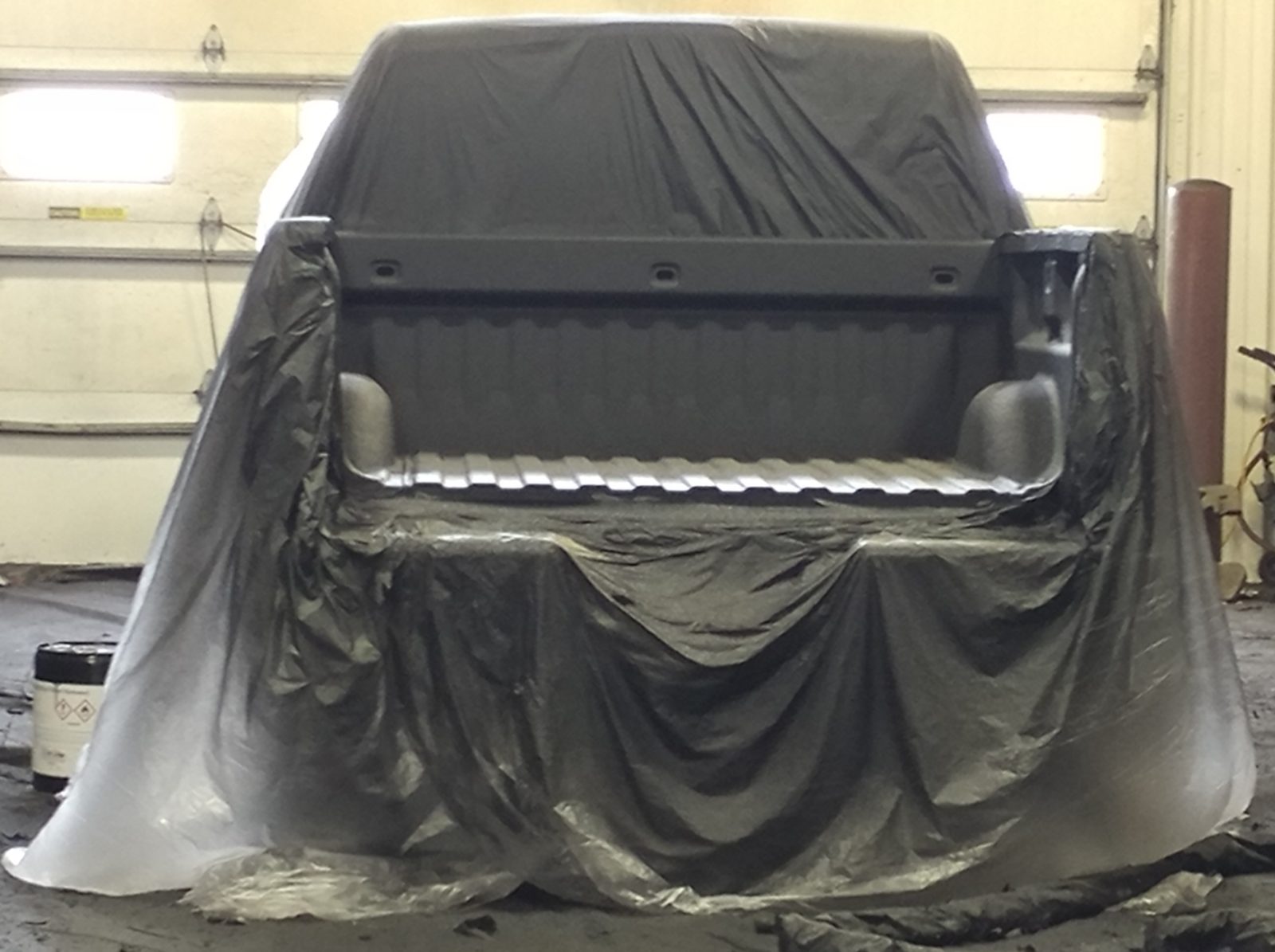
Overspray is real and it travels. Plan on masking well beyond the work area, using containment sheeting in a shop, and paying attention to wind direction outdoors. Budget roughly 10 to 15% extra material over the theoretical coverage to account for it, plus surface profile on blasted steel.
How do you get consistent thickness by eye at that speed?
By pass discipline, not by eye. Consistent gun distance, a steady traverse rate, and roughly 50% overlap between passes. Then verify: a wet film gauge during the pass and a magnetic or ultrasonic DFT gauge afterward. On spec work we recommend documenting readings — the material is uniform, so variation almost always traces back to technique.
Can it be sprayed outdoors, or in cold and humid weather?
Yes, within limits — fast gel means ambient conditions have far less time to affect the film than with a conventional coating that stays wet for hours. What still matters is substrate temperature and dew point, and wind, which turns overspray into a neighbor problem. Tell us your conditions and we will give you the working window.
What happens if I spray a second pass later?
Inside about six hours, a fresh pass knits chemically with what is already there and needs no additional prep. Past that window, abrade the surface and apply 7001 primer before spraying again. Spot repairs on a damaged area work the same way and take minutes.
Getting It Done & What It Costs
I do not own spray equipment. What are my options?
Applying this material requires a plural-component proportioner with a heated hose — it is not airless-sprayable and there is no consumer version. Most people in your position use an applicator; tell us your region and we will point you at one. If you spray for a living and want to add the capability, we can walk you through equipment and training instead.
How much material does a job actually take?
At 100% solids one gallon yields 1,604 mil-sq-ft. That is about 27 sq ft at a 60-mil exterior spec or roughly 80 sq ft at a 20-mil maintenance spec, before adding 10 to 15% for overspray and profile. Send us square footage and target DFT and we will do the math with you.
Will the sprayed finish stay the same color outdoors?
Aromatic polyurea such as OR93BL chalks and fades in direct sun. It is purely cosmetic — corrosion protection, adhesion, and physical properties are unaffected. Where long-term appearance is part of the job, we spec an aliphatic topcoat over it.
How rough can the finished texture be, and can it be controlled?
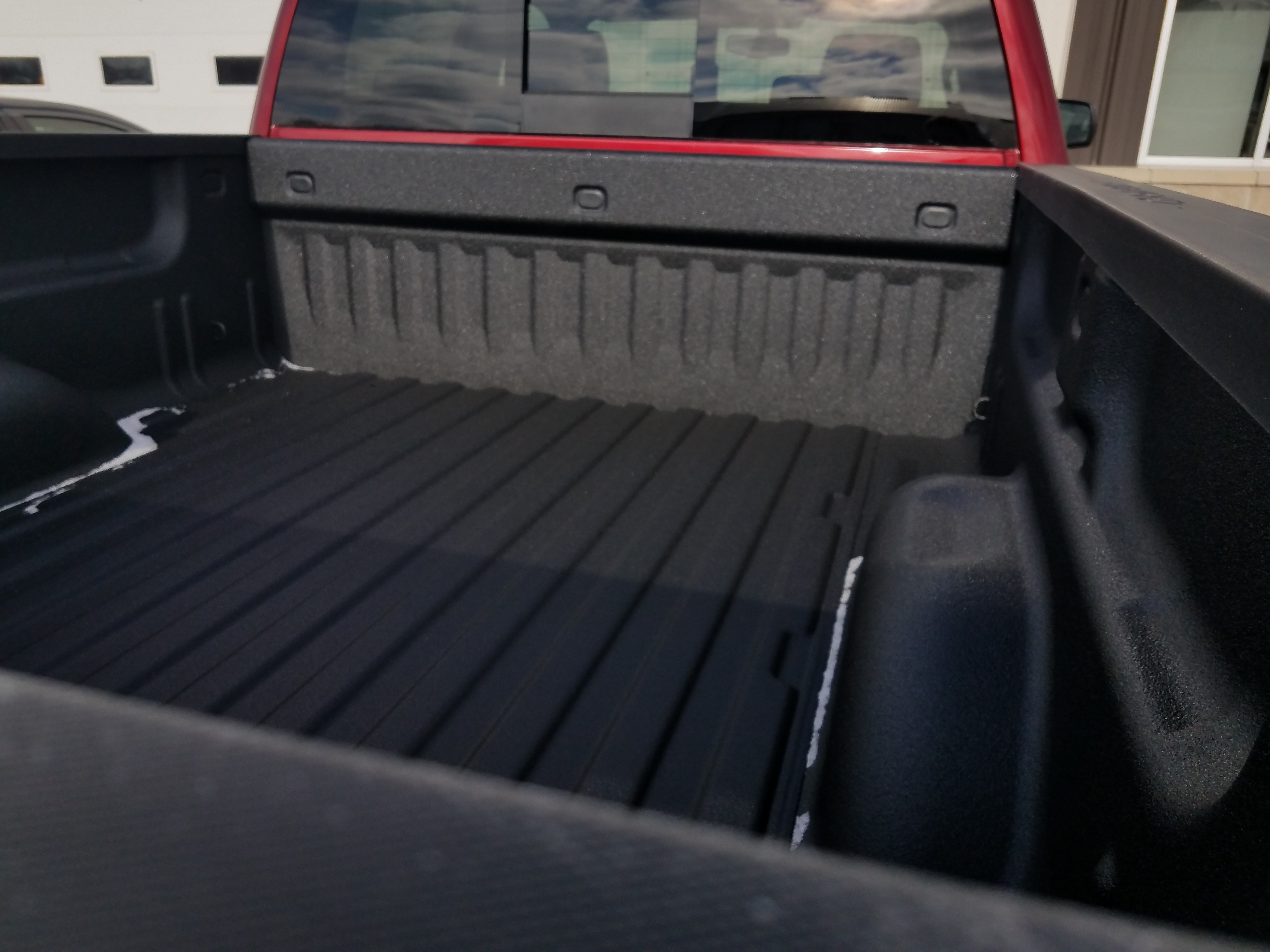
Sprayed polyurea lands with a textured, slightly orange-peel surface — which is usually welcome, since it adds slip resistance on beds and decks. Texture is adjusted through gun distance, pressure, and temperature. If you want it smoother or deliberately more aggressive, say so and we will set the parameters with you.
Still Wondering Whether Spray Is the Answer?
Ask. If a can or a brush honestly covers your situation, we will say that instead of selling you a system.
Ask a Question